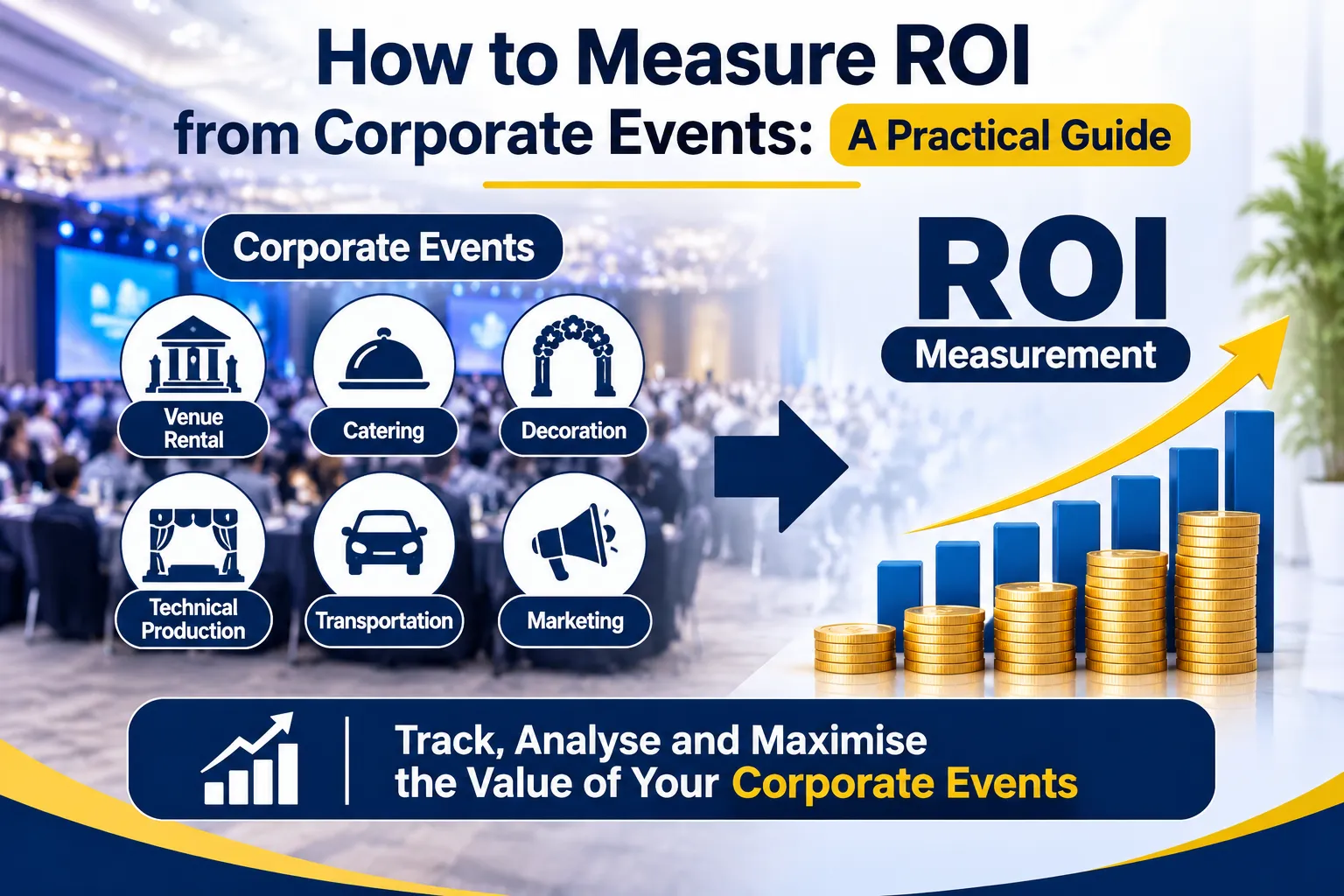
How to Measure ROI from Corporate Events: A Practical Guide
Corporate events are an important investment for businesses looking to build relationships, promote their brands, generate leads and strengthen connections with customers, employees and business partners. From conferences and product launches to exhibitions, annual meetings and corporate celebrations, every event requires careful planning, resources and financial investment.
However, organising a successful event involves more than arranging a venue, welcoming guests and delivering an engaging experience. Businesses also need to understand what they gained from the investment.
This is where Return on Investment (ROI) becomes important. Measuring corporate event ROI helps businesses understand whether their event achieved its objectives, generated valuable business opportunities and delivered results worth the money spent.
In this guide, we will explain how to measure ROI from corporate events, which performance indicators matter, how to calculate event returns and how businesses can improve the results of future events.
What Is Corporate Event ROI?
Corporate Event ROI refers to the value a business receives compared with the amount it invests in organising an event. It helps companies evaluate whether their spending contributed to measurable business outcomes.
These outcomes can include:
- Generating new business leads and sales opportunities.
- Increasing brand awareness and market visibility.
- Building stronger relationships with existing customers.
- Improving employee engagement and motivation.
- Attracting potential business partners and investors.
- Generating sponsorship revenue.
- Supporting product launches and marketing campaigns.
For example, a company may organise a product launch to introduce a new product to potential customers. While the event might attract hundreds of attendees, its actual business value depends on what happens afterward.
Did attendees show interest in the product? Did the company receive qualified enquiries? Did any enquiries convert into customers?
These results provide a clearer picture of whether the event delivered meaningful value.
It is also important to understand that not every corporate event has an immediate financial objective. An employee engagement programme or customer appreciation event may focus on improving relationships, loyalty or satisfaction. These outcomes should also be considered when evaluating overall event performance.
Why Is Measuring Corporate Event ROI Important?
Without proper measurement, businesses may struggle to understand whether their event budgets are being used effectively.
Tracking ROI provides valuable insights that help companies make better decisions about future events.
Here are some important reasons to measure corporate event performance:
- Understand the Value of Event Spending
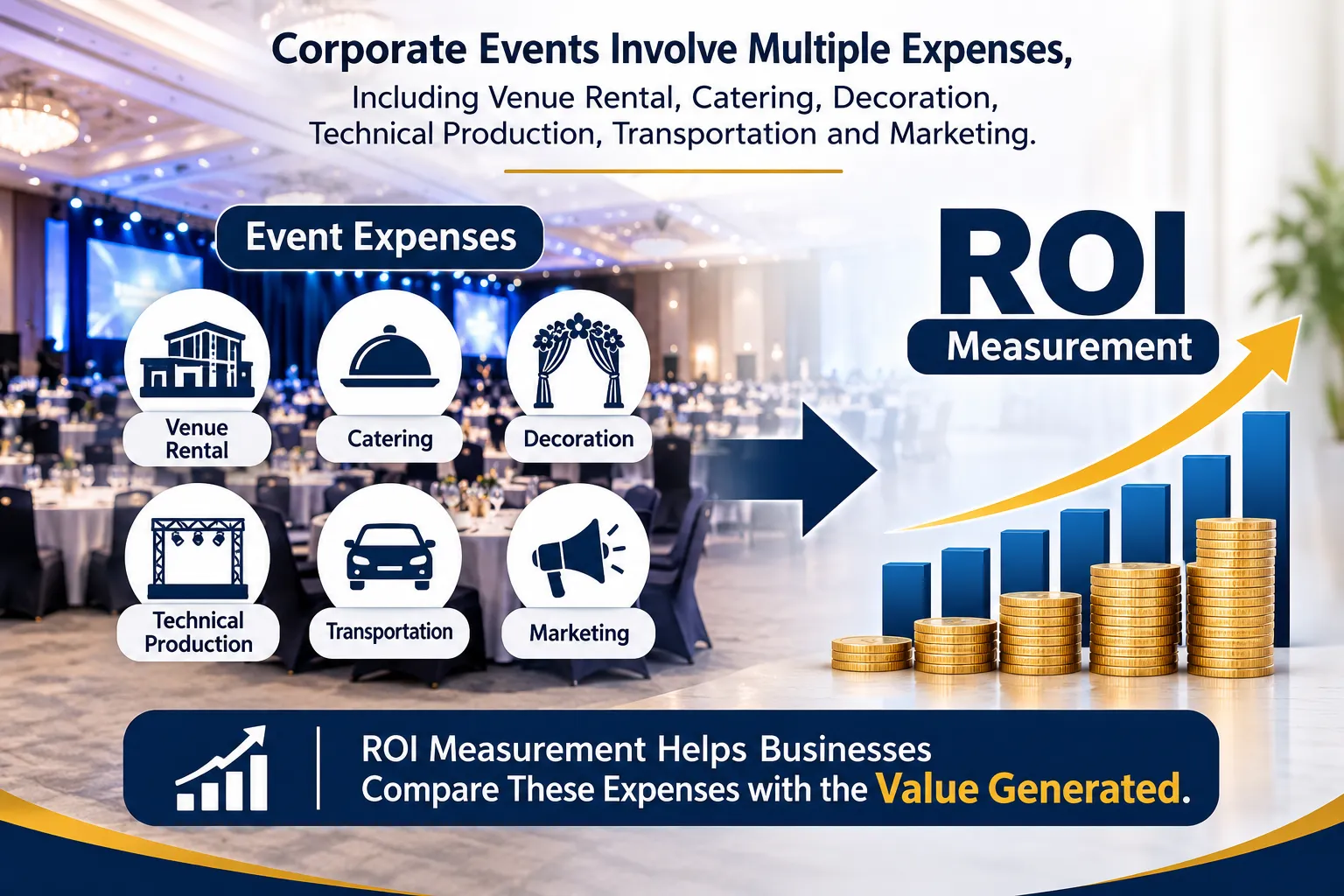
Corporate events involve multiple expenses, including venue rental, catering, decoration, technical production, transportation and marketing. ROI measurement helps businesses compare these expenses with the value generated.
- Make Better Budget Decisions
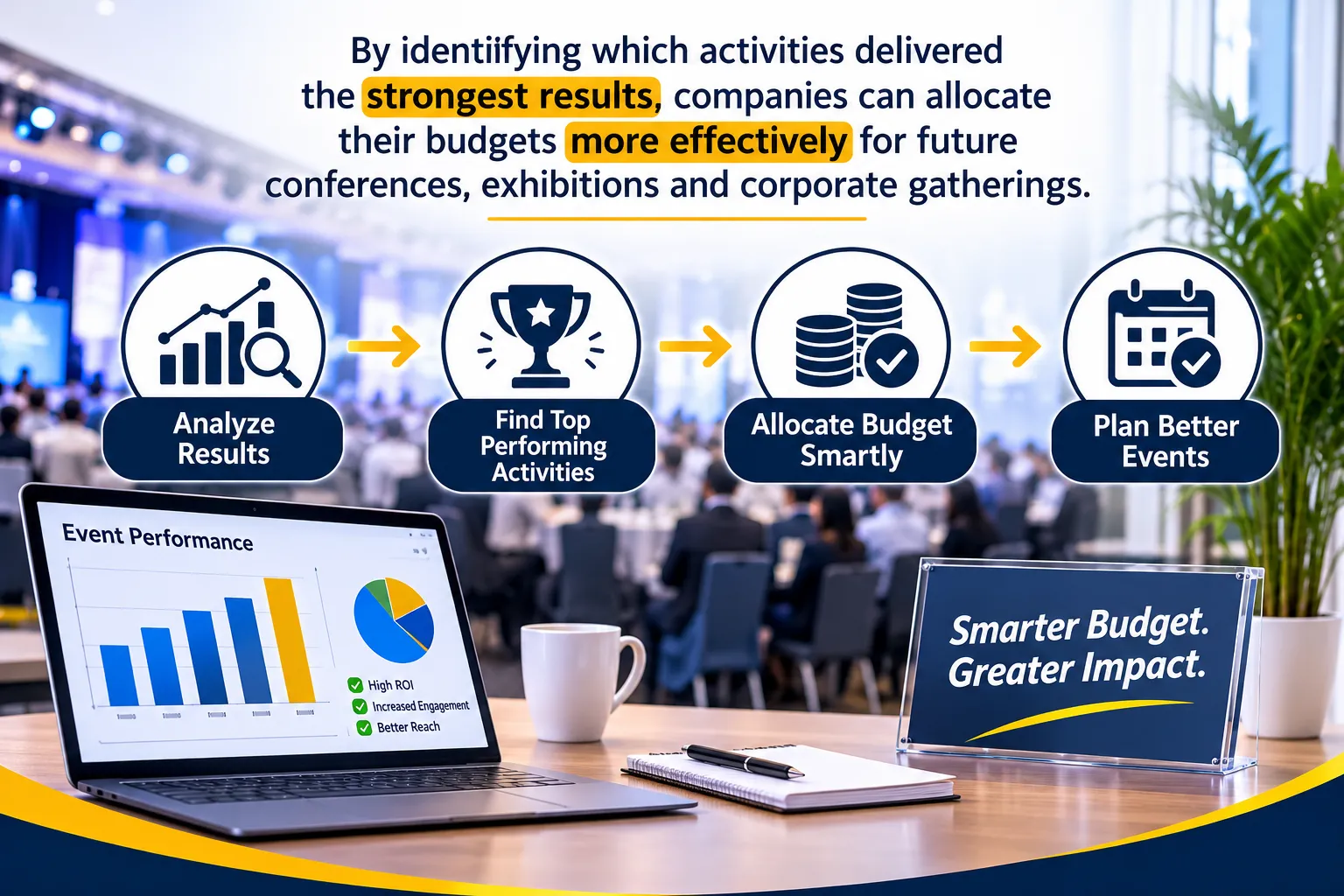
By identifying which activities delivered the strongest results, companies can allocate their budgets more effectively for future conferences, exhibitions and corporate gatherings.
- Improve Lead Generation
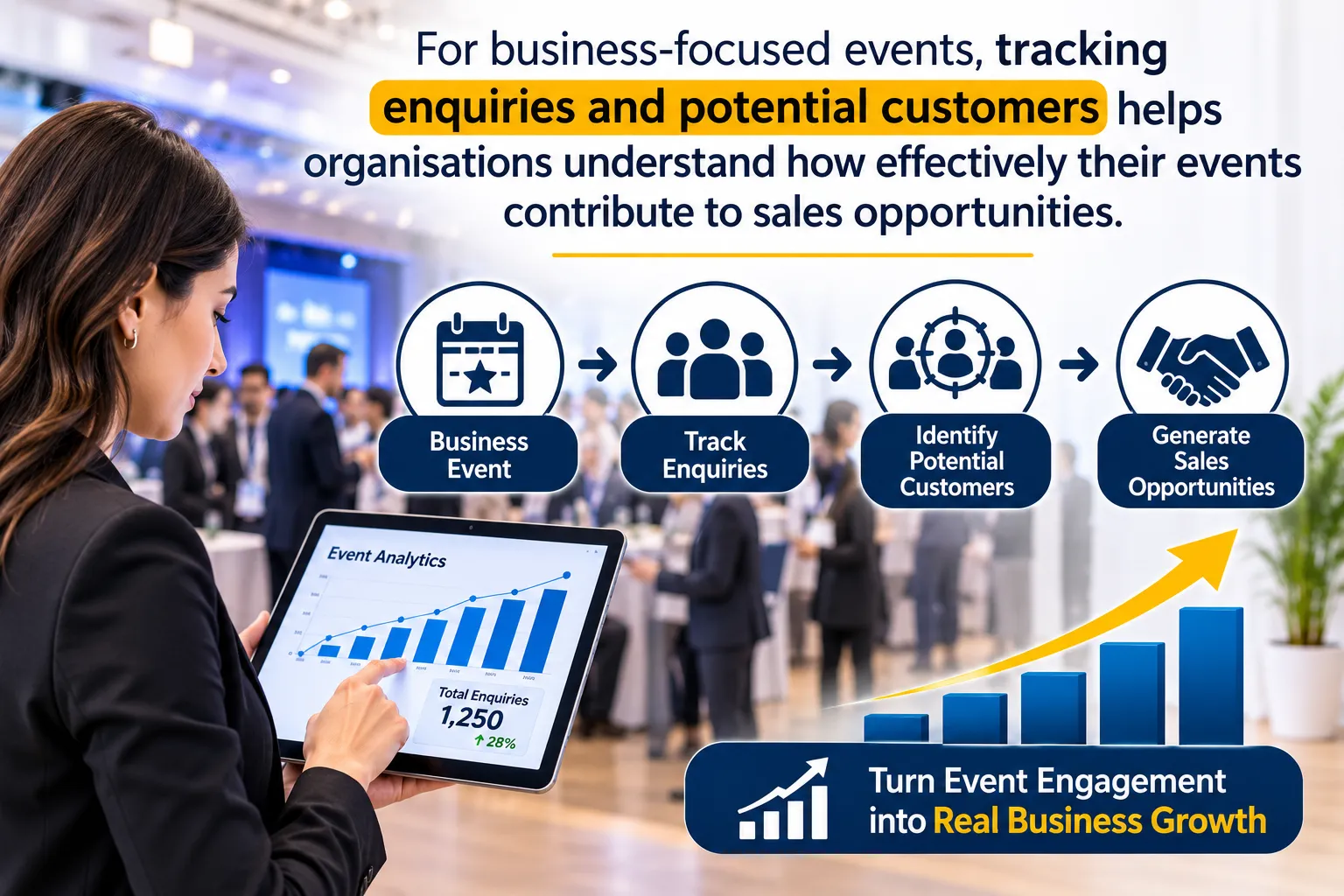
For business-focused events, tracking enquiries and potential customers helps organisations understand how effectively their events contribute to sales opportunities.
- Strengthen Customer Relationships
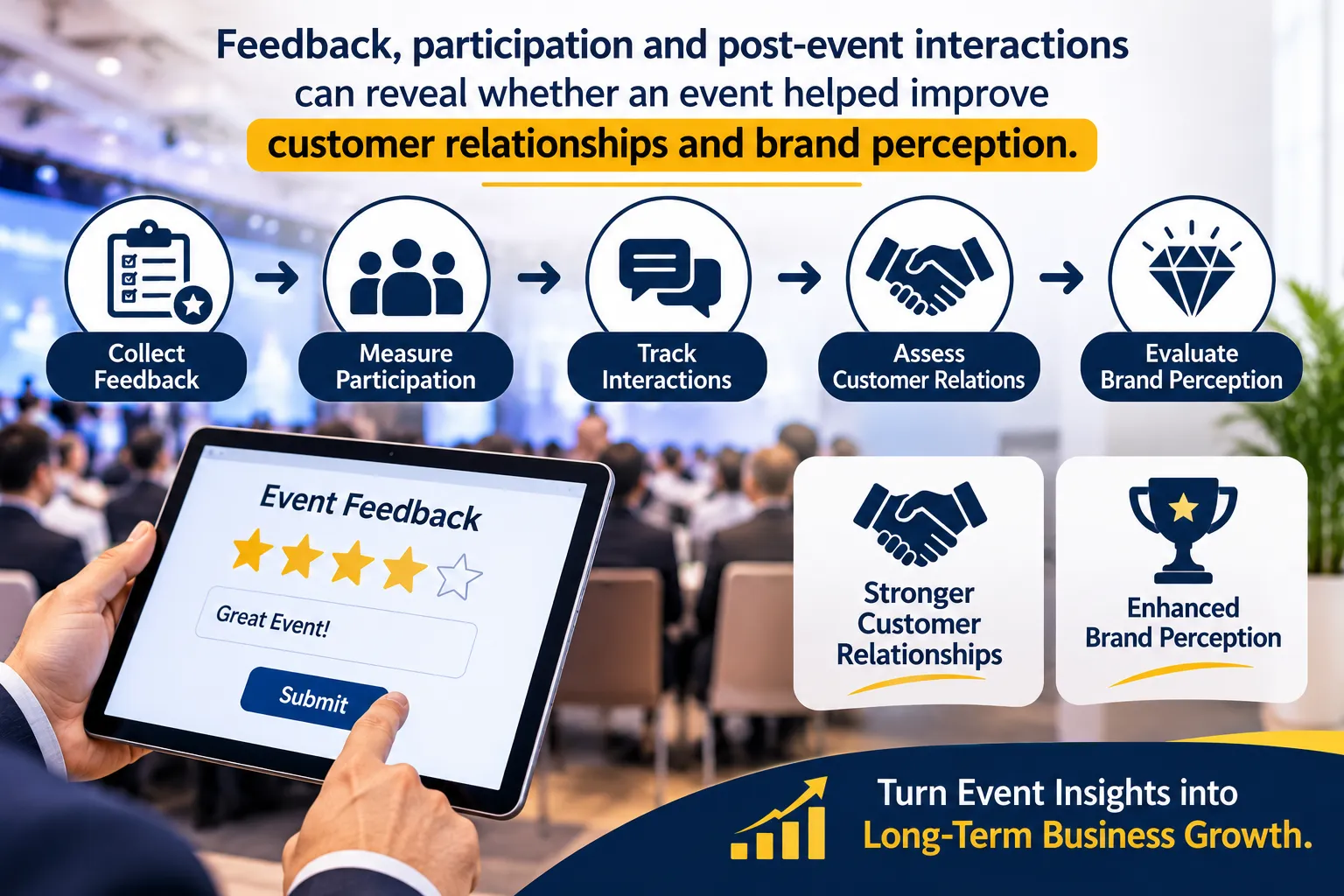
Feedback, participation and post-event interactions can reveal whether an event helped improve customer relationships and brand perception.
- Plan More Effective Future Events
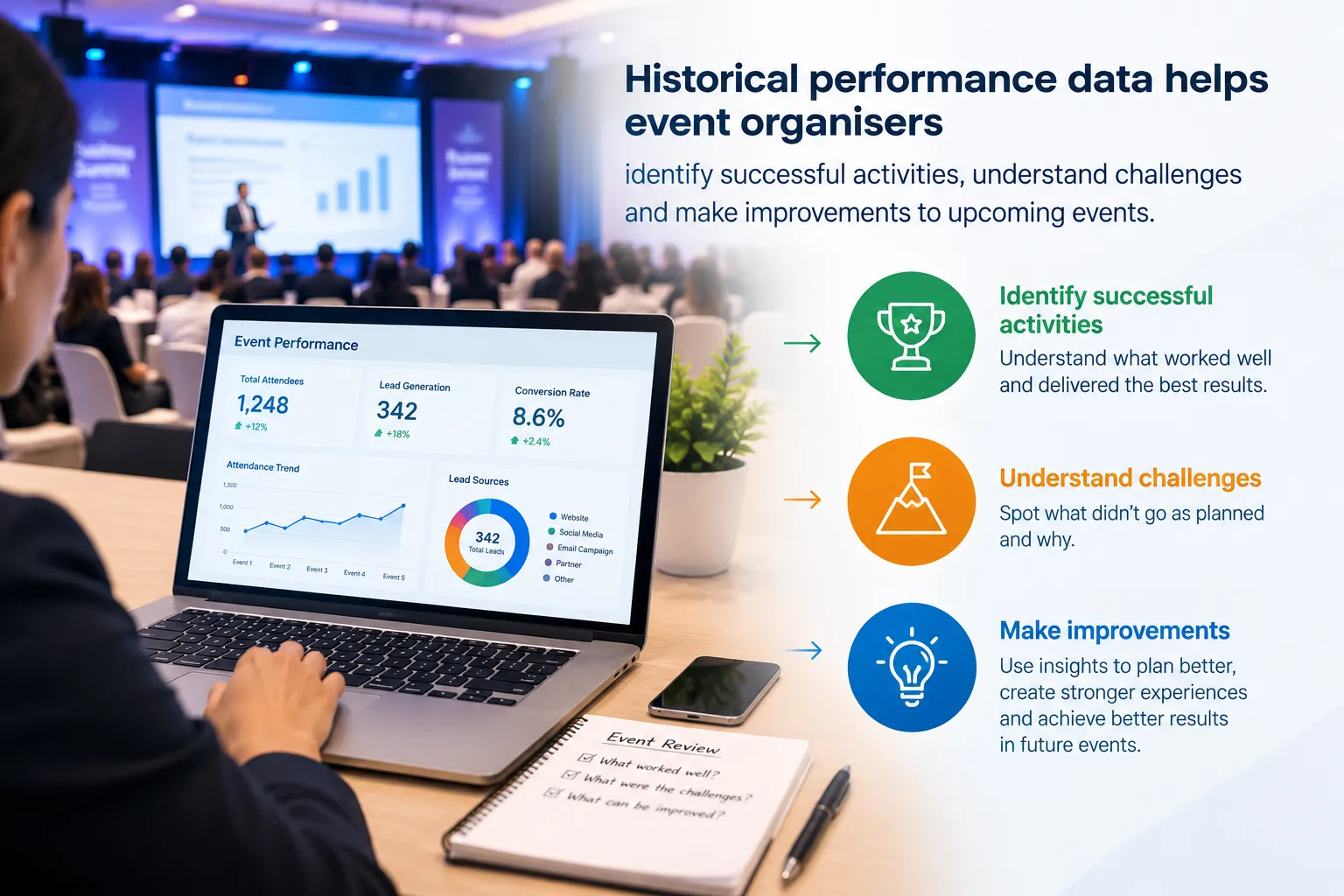
Historical performance data helps event organisers identify successful activities, understand challenges and make improvements to upcoming events.
How to Calculate ROI from Corporate Events
One of the simplest ways to measure corporate event ROI is by comparing the financial return generated with the total event investment.
The standard ROI formula is:
Corporate Event ROI = [(Total Financial Return − Total Event Cost) ÷ Total Event Cost] × 100
Here:
- Total Financial Return refers to the financial value attributed to the event.
- Total Event Cost includes all expenses associated with organising and executing it.
- ROI is expressed as a percentage.
Practical Example of Corporate Event ROI
Suppose a company organises a corporate networking event to connect with potential clients and generate business opportunities.
The company records the following expenses:
| Event Expenses | Cost |
| Venue and arrangements | ₹1,00,000 |
| Catering and refreshments | ₹50,000 |
| Event production and decoration | ₹60,000 |
| Marketing and promotions | ₹30,000 |
| Transportation and logistics | ₹20,000 |
| Other expenses | ₹15,000 |
| Total Investment | ₹2,75,000 |
After the event, the sales team follows up with potential customers. The company eventually generates ₹5,50,000 in attributable revenue.
Using the ROI formula:
ROI = [(₹5,50,000 − ₹2,75,000) ÷ ₹2,75,000] × 100
Event ROI = 100%
This means the event generated an attributable financial return equal to twice its initial investment, leaving a net return of ₹2,75,000 before any additional costs not included in the calculation.
Note: This is an illustrative example. For accurate financial reporting, businesses should use the profit or net contribution attributable to the event rather than treating gross sales revenue as profit.
7 Important Metrics to Measure Corporate Event Success
The ROI formula provides a useful financial overview, but businesses should also track additional performance indicators to understand the complete impact of an event.
Here are seven important metrics worth monitoring.
1. Event Attendance and Participation Rate
The number of people attending an event is one of the first indicators of its performance.
However, registrations alone do not tell the complete story. Businesses should also compare registrations with actual attendance.
For example, if 500 people register for a corporate conference but only 350 attend, the attendance rate is 70%.
Attendance Rate = (Actual Attendees ÷ Total Registrations) × 100
Tracking this metric helps event organisers understand audience interest, registration effectiveness and participation levels.
2. Lead Generation and Conversion Rate
For product launches, exhibitions, networking events and business conferences, lead generation is often an important objective.
Businesses should measure:
- Total enquiries received during the event.
- Number of qualified leads.
- Meetings scheduled with potential customers.
- Sales opportunities created.
- Leads converted into paying customers.
For example, if an exhibition generates 100 enquiries and 20 eventually become customers, the lead-to-customer conversion rate is 20%.
However, businesses should evaluate lead quality rather than focusing only on the total number of enquiries.
3. Cost Per Attendee
Cost per attendee helps businesses understand how much they spend to accommodate each participant.
Cost Per Attendee = Total Event Cost ÷ Actual Number of Attendees
For example, if a corporate event costs ₹3,00,000 and attracts 300 attendees, the cost per attendee is ₹1,000.
This metric is useful when comparing different event formats, venues and audience sizes.
4. Audience Engagement
An event can attract a large audience without creating meaningful participation.
Engagement metrics help businesses understand whether attendees actively interacted with the event.
Some useful indicators include:
- Participation in presentations and discussions.
- Questions asked during sessions.
- Networking interactions.
- Participation in live polls and activities.
- Product demonstrations attended.
- Downloads and interactions with digital event materials.
Higher engagement can indicate that the event content and activities were relevant to the audience.
5. Brand Awareness and Visibility
Many companies organise corporate events to improve brand recognition and strengthen their market presence.
To evaluate this objective, businesses can track:
- Social media mentions and shares.
- Branded hashtag engagement.
- Website traffic during and after the event.
- Media coverage and online mentions.
- New followers and brand enquiries.
- Changes in brand awareness through pre-event and post-event surveys.
For example, a product launch may generate significant online attention even if immediate sales are limited. This increased visibility can contribute to future business opportunities.
6. Customer Satisfaction and Feedback
Attendee satisfaction is another important indicator of event success.
A short post-event survey can help businesses understand how participants experienced the event.
Consider asking questions such as:
- How would you rate the overall event experience?
- Was the event content useful and relevant?
- Were the arrangements and facilities satisfactory?
- Did the event meet your expectations?
- Would you attend a similar event in the future?
Businesses can use the responses to identify improvements in event planning, production, hospitality and overall attendee experience.
7. Long-Term Business Impact
Not every event produces immediate sales or enquiries. Some corporate events create opportunities that develop over several weeks or months.
For this reason, businesses should continue tracking results after the event.
Important indicators include repeat business, customer retention, new partnerships, sales pipeline growth and revenue generated from event-related opportunities.
A longer tracking period is particularly useful for exhibitions, industry conferences and B2B networking events where purchasing decisions often take time.
How to Measure ROI Across Different Types of Corporate Events
Different corporate events have different objectives. Therefore, using the same measurement criteria for every event may not provide accurate results.
Here is how businesses can evaluate different event formats.
| Event Type | Important Performance Indicators |
| Product Launches | Product enquiries, media coverage, brand awareness and sales |
| Corporate Conferences | Attendance, participation, networking and business opportunities |
| Exhibitions and Trade Shows | Qualified leads, meetings, enquiries and conversions |
| Employee Engagement Events | Employee satisfaction, participation and feedback |
| Client Appreciation Events | Customer satisfaction, retention and relationship development |
| Dealer and Distributor Meets | Partner engagement, new agreements and business growth |
For example, a product launch should be evaluated through customer interest and product-related enquiries, whereas an employee engagement event should focus more on employee participation and satisfaction.
Defining the correct measurement criteria before the event makes performance evaluation much more meaningful.
Tools and Technologies That Help Track Event ROI
Technology makes it easier for businesses and event organisers to collect information, monitor participation and evaluate event performance.
Some useful tools include:
Event Registration and Management Platforms: These help track registrations, attendance, participant information and event engagement.
CRM Software: Customer Relationship Management systems help businesses record enquiries, manage follow-ups and track conversions generated through events.
Website Analytics: Website analytics tools can identify increases in website traffic, landing page visits and enquiries following an event.
Social Media Analytics: These tools help monitor brand mentions, audience interactions, content reach and engagement across social platforms.
Post-Event Surveys: Online feedback forms provide useful information about attendee satisfaction and the overall event experience.
Combining information from these sources provides a more complete understanding of event performance.
Common Mistakes to Avoid When Measuring Event ROI
Even when businesses collect event data, certain mistakes can affect the accuracy of their evaluation.
Here are some common issues to avoid:
- Focusing Only on Attendance: A large audience does not automatically mean an event was successful. Participation, lead quality and business outcomes also matter.
- Ignoring Hidden Expenses: Transportation, accommodation, staff time, technical equipment and additional production requirements should be included in the event budget.
- Not Defining Objectives Beforehand: Without clear goals, it becomes difficult to identify which metrics should be tracked.
- Stopping Measurement Immediately After the Event: Some business opportunities take time to convert. Businesses should monitor event-related leads and sales after the event.
- Ignoring Attendee Feedback: Financial results are important, but audience experience also influences the long-term value of corporate events.
Avoiding these mistakes helps organisations build a more reliable event measurement process.
Practical Ways to Improve Corporate Event ROI
Measuring event ROI is only the first step. Businesses should also use the collected information to improve future event performance.
Consider the following practices:
- Set measurable objectives: Define whether the primary goal is lead generation, brand awareness, networking, employee engagement or customer retention.
- Choose the right audience: Invite participants who are relevant to the event’s business objectives.
- Plan the budget carefully: Allocate resources to activities that directly support the event’s goals.
- Create engaging experiences: Include interactive sessions, demonstrations, networking opportunities and relevant activities.
- Use technology effectively: Track registrations, participation, enquiries and audience feedback through appropriate tools.
- Follow up with attendees: Contact potential customers and business partners after the event to maintain engagement and convert opportunities.
- Review performance regularly: Compare actual results with the original objectives and use the findings to improve upcoming events.
Professional event planning and execution also play an important role in achieving these objectives. From venue selection and stage production to audience management and technical arrangements, every detail contributes to the overall experience.
Conclusion
Measuring ROI from corporate events helps businesses understand the real value of their event investments. While attendance and audience engagement provide useful insights, evaluating financial returns, lead generation, customer satisfaction and long-term business opportunities offers a more complete picture.
The most effective approach is to define clear objectives before the event, monitor relevant performance indicators during its execution and evaluate the results through consistent post-event tracking.
When businesses combine strategic planning, engaging experiences and proper performance measurement, corporate events become more than individual gatherings. They become valuable opportunities to strengthen relationships, increase brand visibility and support business growth.
At Eternal Events, creating meaningful and professionally managed event experiences starts with understanding the purpose behind every event. Whether it is a corporate conference, product launch, exhibition or brand activation, a well-planned event can help businesses create lasting impressions and stronger connections with their audiences.